
Wine knowledge isn’t about memorizing every label. Wine education for beginners starts with understanding how grape varieties shape flavor, how to pair wine with food, and what skills can open doors to wine-related careers. That’s the foundation for choosing a bottle with confidence and appreciating what’s in the glass.
Wine can seem to have its own language, but you don’t need to know it all to begin. Start with familiar grape varieties and their flavor profiles, explore flexible pairing principles, and see how wine knowledge connects to hospitality, retail, education, and other fields. The goal is to make wine more approachable, whether you want to feel more confident at the table or learn about the industry.
Key Takeaways
- Learn how a grape’s character can offer clues about the aromas and flavors in your glass.
- Choose food pairings by considering flavor and balance, rather than relying on rigid rules.
- Explore how wine knowledge can support a path into wine-related careers.
- Discover how tasting wines can make learning about different styles a lively shared experience.
Wine and food pairing
Pairing wine with food means considering how their flavors and textures work together. A few simple principles can help you notice what each wine brings to a dish.
Food and Wine Pairing Principles
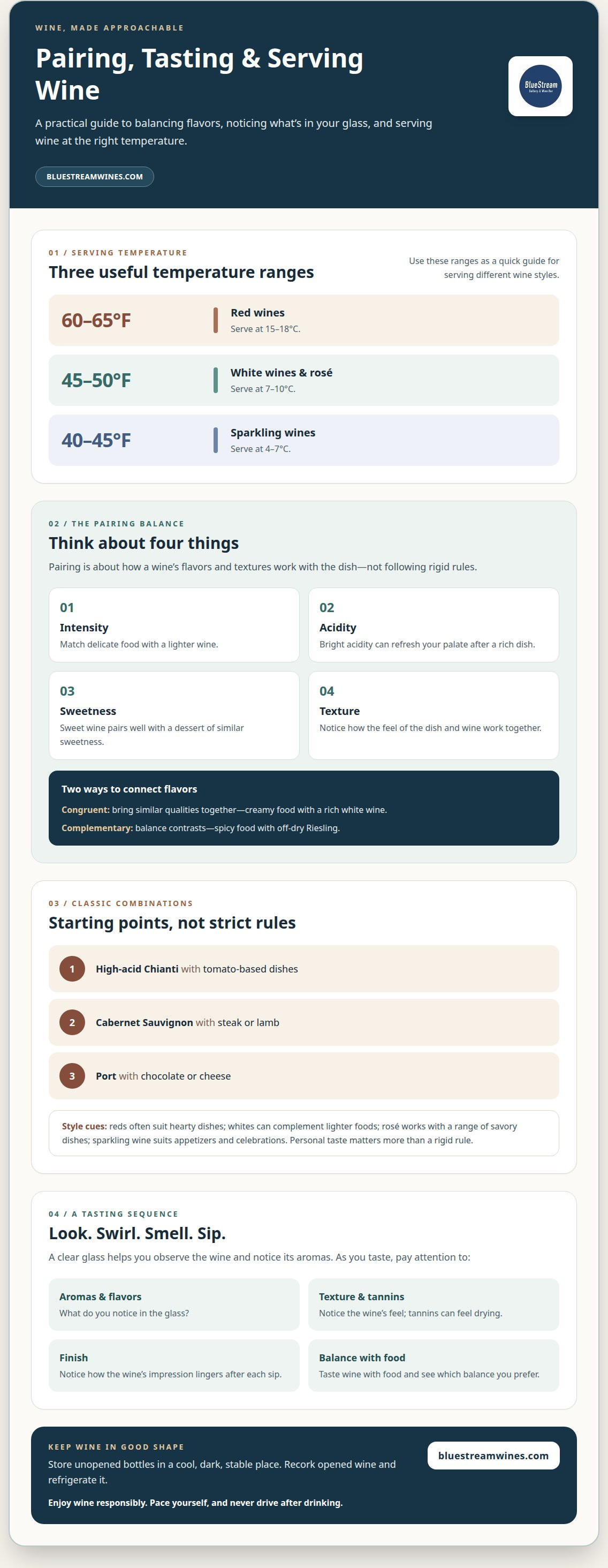
Good pairings balance the intensity, acidity, sweetness, and texture of the dish and wine. Match delicate food with a lighter wine, or let bright acidity refresh your palate after a rich dish. Tannins can feel drying, while a wine’s finish lingers after each sip. Store unopened bottles in a cool, dark, stable place; recork opened wine and refrigerate it.
Congruent and Complementary Pairings
A congruent pairing brings similar qualities together, while a complementary pairing balances contrasting ones. Creamy food and a rich white wine echo each other; spicy food and off-dry Riesling balance heat with sweetness. At a tasting, look, swirl, smell, and sip. Notice aromas, flavors, texture, tannins, and finish. These terms help you describe what you taste without specialist language.
Classic Food and Wine Pairings
Classic combinations offer useful starting points, not strict rules. Try high-acid Chianti with tomato-based dishes, Cabernet Sauvignon with steak or lamb, and Port with chocolate or cheese. Pair sweet wine with a dessert of similar sweetness. Enjoy wine responsibly, pace yourself, and never drive after drinking.
Pairing Food with Wine Styles
Red wines often suit hearty dishes, while whites can complement lighter foods, but personal taste matters more than a rigid rule. Rosé works with a range of savory dishes, and sparkling wine suits appetizers and celebrations. Serve reds at 60-65°F (15-18°C), whites and rosé at 45-50°F (7-10°C), and sparkling wines at 40-45°F (4-7°C). Use a clear glass that lets you observe the wine and notice its aromas; taste wine with food to see which balance you prefer.
Wine grape varieties
Grape variety influences a wine’s aromas, flavors, and structure. Recognizing a few familiar names makes tasting and reading labels easier.
Popular White Wine Varieties
Sauvignon Blanc often shows citrus or herbal notes, while Chardonnay can range from crisp to rich. Pinot Grigio and Pinot Gris are names for the same grape, used in Italy and France respectively. For beginners, these varieties offer useful comparisons: notice how acidity, aromas, and other grape compounds shape each white wine. Champagne, by contrast, is sparkling wine produced in France’s Champagne region from Pinot Noir, Chardonnay, and Meunier grapes.
Popular Red Wine Varieties
Merlot is a familiar red grape, often appreciated for its softer feel beside firmer Cabernet Sauvignon. Pinot Noir, another widely recognized name, can show cherry and other red-fruit notes. Red wines may also suggest blackberries or spice, though growing region and winemaking shape the final character. Tasting varieties side by side helps reveal how grapes create distinct styles, from lighter expressions to more structured wines.
Varietal Wines and Blends
A varietal wine highlights one grape, while a blend combines grapes to create a particular balance. According to the Office of the Federal Register, National Archives and Records Administration, a single grape variety may be named on a U.S. wine label when at least 75 percent of the wine comes from that variety and the wine carries an appellation of origin. The Bureau of Alcohol, Tobacco and Firearms states that a grape variety name may be used as a wine’s type designation only if at least 75 percent comes from that grape.
For a first bottle, try Sauvignon Blanc or Merlot; bottle prices vary with producer, region, vintage, and style. Read the label for grape, region, vintage, and alcohol content. Compare those clues during wine tasting events to discover which styles you most enjoy.
Wine education and careers
Wine learning can grow through guided classes, books, and tasting experiences. A class can introduce fermentation, wine regions, and serving language; a book lets you revisit the basics at your own pace. At a tasting, compare wines and write brief notes about aromas, acidity, texture, and finish. These habits help develop your palate and turn impressions into clear descriptions.
Build a simple learning routine: choose one theme, taste examples, then record what changes. For instance, compare Sauvignon Blanc and Cabernet, paying attention to structure and style rather than scores. Read about each wine’s region and connect the place, grape, and winemaking choices. Repeating the process makes new terms easier to understand and gives your learning a practical purpose.
Wine knowledge can support careers in hospitality, retail, education, and production. Restaurant staff use it to explain styles and guide guests; retail teams help shoppers understand labels and choices. Wine educators make complex ideas accessible, while production roles involve the work behind fermentation and finished wines. Each path calls for different strengths, from attentive service to detailed product knowledge.
To explore a career direction, identify the work that interests you, then build relevant knowledge through focused learning and conversations with professionals. A hospitality-minded learner might practice describing wine clearly; someone drawn to production can study fermentation and how winemaking choices shape style. Wine education for beginners is most useful when it connects tasting, regional knowledge, and communication skills to a real goal. Those foundations make future study more purposeful, whether wine remains a passion or becomes a profession.
BlueStream Wines: Wine Bar Lounge
BlueStream Wines offers a Wine Bar Lounge and Wine Tasting Events for exploring wine in a welcoming social setting. Its monthly Saturday calendar adds more ways to gather: Mahjong Happy Hour takes place every 2nd Saturday, wine tastings hosted by West Coast wineries or winemakers every 3rd Saturday, and Extreme Game Afternoons every 4th or 5th Saturday, focused on learning casino poker and craps.
For a private gathering, Private Venue Rentals offer another way to bring people together. Find BlueStream Wines & Gallery at 555 Grant Avenue in San Francisco’s Chinatown, next to the Financial District, and contact BlueStream Wines to explore an experience that suits your interests.
Let Curiosity Shape Your Next Glass
Let each new bottle be a chance to notice what you enjoy, ask better questions, and build confidence at your own pace. Wine education for beginners isn’t a finish line; it’s an ongoing practice of curiosity, discovery, and shared experience. Your preferences may shift as you encounter new grapes, places, and styles. That’s part of the pleasure.
Choose a next step that feels inviting, whether you want to deepen your tasting experience or simply enjoy wine in good company. Explore your next wine experience with BlueStream Wines, and keep following the flavors that spark your interest. Every glass can open a new conversation.
Frequently Asked Questions
What are the main types of wine and how do they differ?
The main types are red, white, rosé, sparkling, and fortified wine. Red, white, and rosé differ in color, grape handling, and typical flavor profile; sparkling wine has bubbles, while fortified wine, such as Port, has additional spirit added. Each type spans different levels of sweetness and body, so the category is a starting point, not a complete description of what’s in your glass.
What are good beginner wines and typical prices in the United States?
Sauvignon Blanc or Merlot can be approachable starting wines for beginners. Bottle prices vary with producer, region, vintage, and style.


