
The right product launch event venue in San Francisco supports the product reveal, not just the guest list. Costs depend on the space, event format, production, staffing, and other requirements, so room rental is only one part of the budget.
A polished launch gives guests room to experience the product through a clear presentation, hands-on demonstrations, conversation, and press opportunities. Consider how the space and layout support these moments, then match the setting to your launch goals. A thoughtful choice makes the event feel cohesive from the welcome to the final demo.
Key Takeaways
- Build your budget around the full launch experience, including audiovisual needs, production, and staffing, rather than focusing on the room alone.
- Choose a layout that gives keynotes, product demonstrations, networking, and press moments room to work together.
- Match the venue to your audience, technical needs, and event format so the setting supports the launch instead of complicating it.
- For a more intimate gathering, explore BlueStream Wines’ private venue rentals and Wine Bar Lounge as options for hosting.
1. How much does a product launch venue cost in San Francisco?
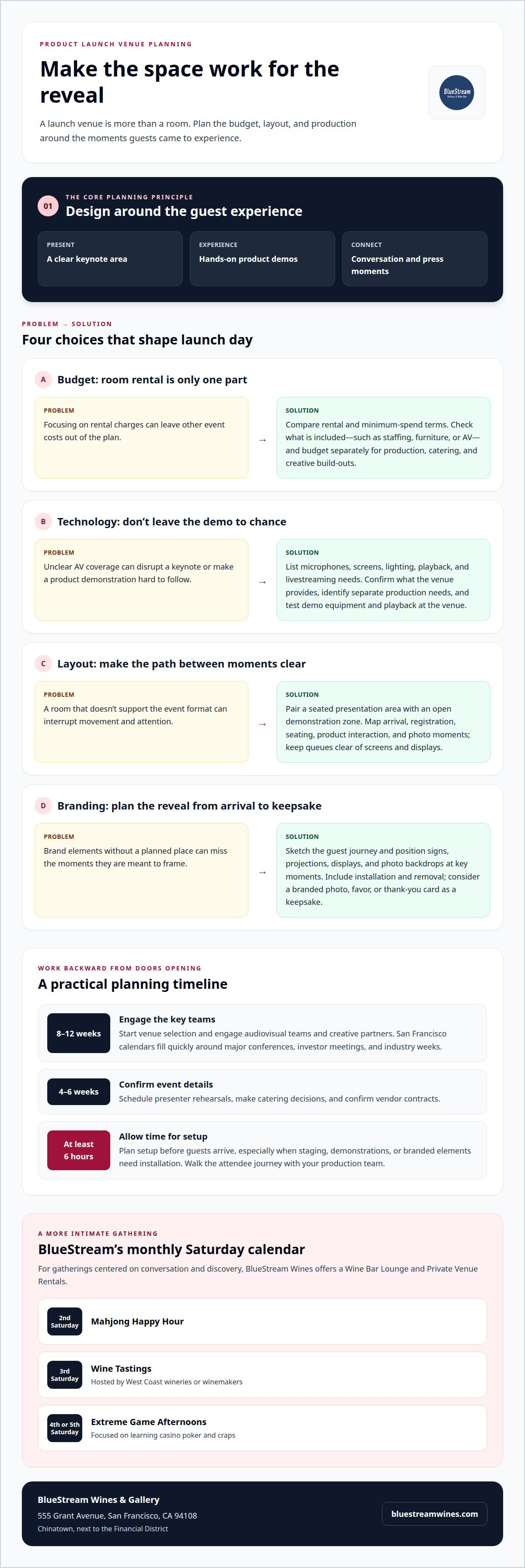
Choosing a product launch event venue in San Francisco starts with defining the format, date, duration, guest count, and production needs. Compare rental charges and minimum-spend terms, noting what each covers, such as staffing, furniture, or audiovisual equipment. This makes it easier to account for production, catering, and creative build-outs in your overall budget.
For a product launch event venue in San Francisco, plan audiovisual needs around the guest experience. List requirements for microphones, screens, lighting, playback, and livestreaming, then identify what the venue includes and what needs separate production. Test demonstration equipment and presentation playback at the venue before launch day. Clear sound and sightlines help guests follow a keynote or hands-on demo.
Branding can be as simple as a logo at registration or as immersive as an environment built around the product. Sketch the guest journey, then position signs, projections, product displays, and photo backdrops around key moments. A reveal wall, for example, can frame the announcement and offer a natural photo spot. Include installation and removal in your plan for creative build-outs.
Plan guest appreciation as part of the experience. A branded photo, party favor, or thank-you card gives guests a keepsake; National Event Pros recommends thanking attendees with one.
Permit, insurance, and licensing requirements depend on the event activities and venue terms. Document whether the launch includes alcohol service, public access, amplified entertainment, or installed structures, and align each activity with the venue’s requirements.
Venue agreements set expectations for catering, alcohol service, and outside vendors. Review who provides food and beverages, what service arrangements apply, and how vendor access, setup, and cleanup affect the budget.
2. Event space types and layouts
Start with the launch format, then choose spaces that support its key moments. A theater layout directs attention toward presentations, while a reception layout encourages movement and collaboration. For a product reveal, combine a seated presentation area with an open demonstration zone, giving guests a clear route between the stage and product. Modular indoor and outdoor spaces can also separate hosting, networking, and press activity.
San Francisco offers settings with distinct character. The Log Cabin at the Presidio, built in 1937, brings a historic atmosphere. At 715 Harrison Street, the event space spans 15,000 square feet, while The Regency Ballroom, August Hall, and Bimbo’s 365 Club have capacities ranging from 400 to 1,500 guests. Compare each space’s scale and setting with your expected audience and event format.
Match seating to what attendees need to see and do. Rows suit a keynote, cabaret tables encourage discussion, and a standing reception leaves room for product demonstrations. For a smaller gathering, a compact layout can keep guests close to the product. For a larger presentation, consider how the room’s shape affects sightlines from the back and sides.
Before confirming a layout, map the guest journey from arrival to departure. Mark registration, seating, product interaction, and photo moments, then make sure queues won’t block screens or displays. Use lighting to distinguish the keynote area from hands-on stations. If the schedule moves from a presentation to networking, choose flexible furniture and staging that can be rearranged between segments.
3. Venue selection for product launches
Compare San Francisco venues against your priorities: guest access, capacity, technical amenities, and the overall experience. Map the arrival route, then assess usable event space against your audience size and planned activities. A product-focused gathering needs a different flow from a presentation followed by networking.
Use a side-by-side checklist for each venue: keynote sightlines, power for demonstrations, backstage access, registration flow, and space for partners. For outdoor plans, consider how weather could affect the schedule and whether key moments can move indoors. A versatile venue helps transitions feel seamless instead of forcing your team to rebuild the event around the room.
Book early. In San Francisco, calendars fill quickly around major conferences, investor meetings, and industry weeks. Venue selection, audiovisual teams, and creative partners should be engaged 8-12 weeks before the launch. That window gives your team time to coordinate the space with product development and marketing plans.
Then work backward from doors opening. Schedule presenter rehearsals, catering decisions, and vendor contract confirmations 4-6 weeks ahead. Allow at least 6 hours for setup before guests arrive, especially when staging, demonstrations, or branded elements need installation. Visit the venue with your production team to trace the attendee journey from check-in through the final interaction.
The best choice balances location, capacity, and amenities with the moments your launch must deliver. If a smaller, hosted gathering suits your plans, explore San Francisco venue options.
BlueStream Wines: Wine Bar Lounge
BlueStream Wines offers a Wine Bar Lounge and Private Venue Rentals for gatherings centered on conversation and discovery. Consider it for a more intimate event where guests can connect around a product reveal or shared experience.
The monthly calendar brings people together for Mahjong Happy Hour every 2nd Saturday, Wine Tastings hosted by West Coast wineries or winemakers every 3rd Saturday, and Extreme Game Afternoons every 4th or 5th Saturday, focused on learning casino poker and craps.
Find BlueStream Wines & Gallery at 555 Grant Avenue in San Francisco’s Chinatown, next to the Financial District. For details about the Wine Bar Lounge or Private Venue Rentals, visit bluestreamwines.com.
Make your launch story feel personal
A launch is more than a reveal; it’s the first shared chapter of your product’s story. Let that story shape the atmosphere, how guests connect, and what they remember. Choosing a product launch event venue in San Francisco gives you the opportunity to make the setting an extension of your brand, whether you’re gathering a close-knit circle or welcoming a wider community. A thoughtful first impression makes product discovery feel personal, not merely presentational.
For a warm, social gathering, BlueStream Wines offers a Wine Bar Lounge, Private Venue Rentals, and Wine Tasting Events. Consider the mood you hope to create, then choose a setting that feels true to it.
Explore BlueStream Wines for your event, and take the next step toward a launch with character and purpose.
Frequently Asked Questions
How much does a product launch venue cost in San Francisco?
Costs depend on the space, event date, rental duration, guest count, and production requirements. A product launch event venue in San Francisco may also involve separate charges for staffing, audiovisual support, catering, and creative installation. Compare quotes by what they include, then match those details to your event plan to understand the full budget.
What are the best venues in San Francisco for a product launch event?
The best fit depends on your audience and event format. San Francisco options include The Regency Ballroom, August Hall, and Bimbo’s 365 Club for larger gatherings, while the Log Cabin at the Presidio offers a historic setting. Compare location, capacity, layout, and the atmosphere each space lends to your product story before deciding.
How many guests can San Francisco product launch venues accommodate?
Product launches often invite 150 to 500 guests, while an intimate event with under 100 can create a more exclusive feel. Launches with 500 or more guests can bring crowd energy, but need a layout that supports arrival, movement, and clear views. Set your guest target first, then compare it with each venue’s usable configuration.
Which San Francisco venues offer AV equipment, staging, and product demo facilities?
Venue amenities vary, so compare each San Francisco space with your presentation and demonstration needs. Review an equipment inventory, staging details, and a floor plan that shows screen visibility and demonstration areas. A product launch event venue in San Francisco should suit the run of show, including speaker audio, playback, and hands-on product access.
What are the best San Francisco venues for tech product launches and press events?
Choose a space that supports technical presentations while giving press a practical place for briefings, interviews, and product access. For a tech-focused product launch event venue in San Francisco, assess the planned demonstration setup, press movement, and audience flow together. Separating media moments from general guest activity helps each experience feel considered and keeps the event running smoothly.


