
A higher price doesn’t automatically mean better wine. To tell if a wine is good quality, look for balance: acidity, alcohol, tannins, and flavor should work together, not compete. A pleasant finish that lingers is another useful clue.
Price and an impressive label can be tempting shortcuts, but neither tells the whole story. A better test is how the wine smells and tastes, and whether its character feels harmonious from the first sip through the finish.
This guide explains how to assess balance, aromas, flavor, and finish, then consider those impressions alongside price. You’ll have a simple way to judge what’s in your glass, whether you’re choosing a bottle for yourself or sharing wine with friends.
Key Takeaways
- Assess whether acidity, alcohol, tannins, aromas, and sweetness feel integrated rather than letting one element overwhelm the wine.
- Pay attention to the finish: lingering, pleasant flavors can add another clue to the wine’s overall quality.
- Use price as context, not proof; judge whether the wine’s flavor and balance make it satisfying to you.
- Wine tastings offer a chance to explore different styles and sharpen your sense of what you enjoy.
1. Balance among acidity, alcohol, tannins, aromas, and residual sugar
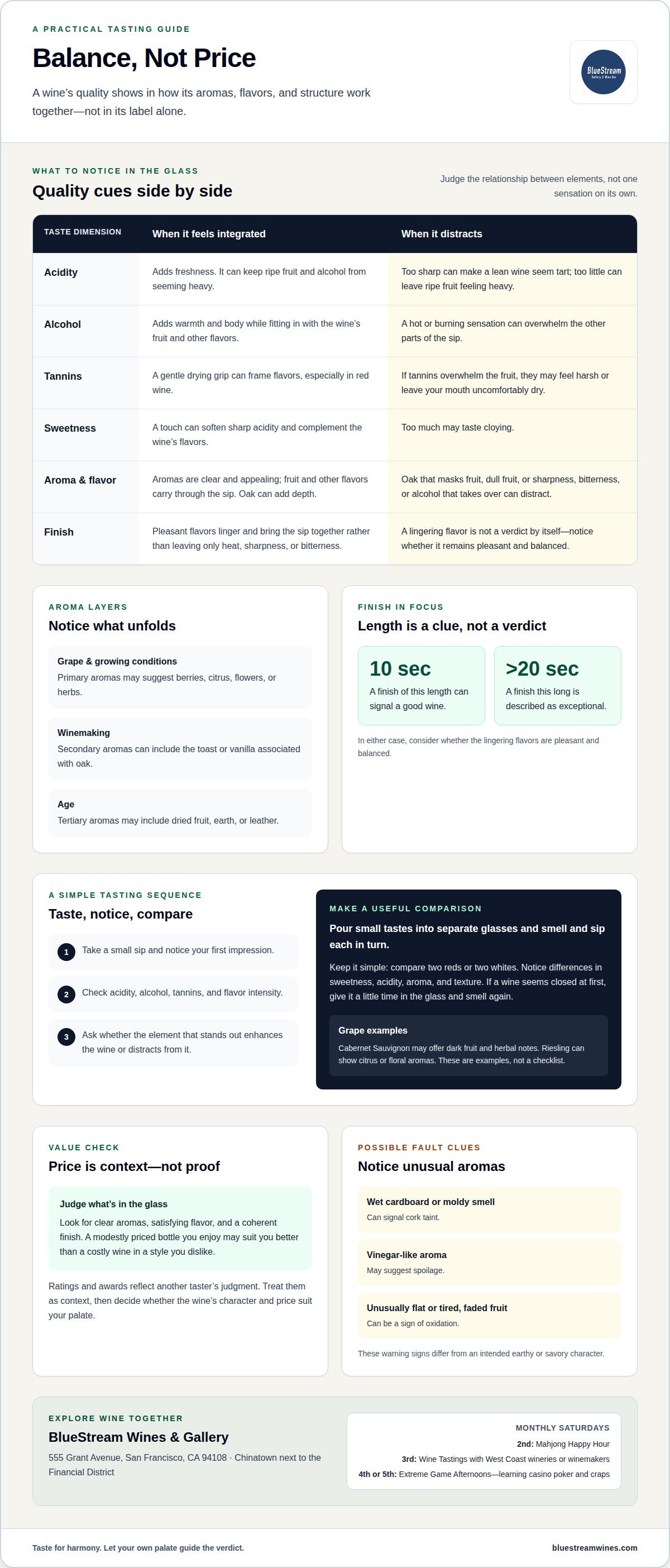
Balance means acidity, alcohol, tannins, aromas, and residual sugar feel integrated rather than competing. In a red wine, lively acidity can keep ripe fruit and alcohol from seeming heavy, while tannins add a gentle drying sensation. A touch of sweetness can soften sharp acidity, but too much may taste cloying. Notice whether each element supports the others throughout the sip.
Start with the aroma. Primary aromas come from the grapes and their growing conditions, and may suggest berries, citrus, flowers, or herbs. Secondary aromas develop during winemaking, such as the toast or vanilla associated with oak. With age, tertiary aromas can emerge, including dried fruit, earth, or leather. A complex wine may reveal these layers gradually. Oak should add depth without masking the fruit.
Grape variety shapes a wine’s aroma and intensity. Cabernet Sauvignon may offer dark fruit and herbal notes, while Riesling can show citrus or floral aromas. These are examples, not a checklist: consider whether the aromas are clear, appealing, and consistent with the flavor. If a bottle seems closed at first, give it a little time in the glass, then smell again for changes.
Beginners can compare wines side by side by pouring small tastes into separate glasses and smelling and sipping each in turn. Keep the comparison simple, such as two reds or two whites, and notice differences in sweetness, acidity, aroma, and texture.
Finally, notice aromatic persistence and length on the palate: the finish is the flavor that remains after swallowing. A finish lasting 10 seconds can signal a good wine, while one lasting over 20 seconds is described as exceptional. Length alone isn’t a verdict; consider whether the lingering flavors remain pleasant and balanced.
2. Balance of acidity, alcohol, tannins, and flavor
A balanced wine lets its components complement one another without any single element taking over. Acidity brings freshness, alcohol adds warmth and body, and tannins create a drying grip, especially in red wines. Fruit, herbal, or savory flavors should work alongside those sensations. Ripe berry flavors, for example, may feel heavy if acidity is too low, while sharp acidity can make a lean wine seem tart.
Assess the wine over a small sip. Notice the first impression, then how its texture and flavors change across your palate. In a Cabernet Sauvignon, firm tannins can frame dark-fruit flavors; they may feel harsh if they overwhelm the fruit or leave your mouth uncomfortably dry. Alcohol should feel warming, not hot or burning. In a white wine, acidity can provide lift, while fruit flavors give that crispness shape.
To assess flavor balance, consider whether the wine feels fresh, full, or drying, and whether those qualities work together. A lively white with citrus notes may taste bright rather than sour when its fruit carries through. A rich red can feel rounded when its tannins and alcohol don’t bury the fruit. Impressions depend on the wine’s style, so judge the relationship between elements, not one sensation alone.
Try this simple sequence: take a small sip, notice the acidity, alcohol, tannins, and flavor intensity, then identify which element stands out most. Ask whether it enhances the wine or distracts from it. A balanced finish brings the flavors together instead of leaving only heat, sharpness, or bitterness. Focused tasting also makes side-by-side comparisons more useful.
3. Wine quality relative to price
A higher price or elaborate label doesn’t prove a wine is better. Judge value by what the wine delivers in the glass: clear aromas, satisfying flavor, and a coherent finish. A modestly priced bottle that feels expressive and enjoyable may suit you better than a costly bottle in a style you don’t like.
Ratings and awards can offer a point of comparison, but they reflect another taster’s judgment. Your own preference matters: an award-winning Cabernet Sauvignon isn’t automatically a better choice if you prefer bright, lighter wines. Treat scores as context, then decide whether the bottle’s character and price suit your palate.
You don’t need expert vocabulary to assess quality. Pour a small taste, notice whether the fruit seems fresh or dull, and check whether the wine feels balanced rather than dominated by sharpness, bitterness, or alcohol. A pleasing aroma, integrated flavors, and an enjoyable finish are useful signs. Compare those impressions with the price, not the label alone.
Faults can spoil the experience regardless of cost. A wet-cardboard or moldy smell can signal cork taint; a vinegar-like aroma may suggest spoilage. Oxidized wine can seem unusually flat or tired, with faded fruit. These warning signs differ from an intended earthy or savory character, so consider whether the aromas seem fresh and appropriate to the wine.
Serve each wine in a clean glass and at a temperature suited to its style. A white served too cold may hide its aromas, while a red served too warm can make alcohol more prominent. Give the wine a moment in the glass, then judge its aroma and flavor before deciding whether the quality feels worth the price.
BlueStream Wines
BlueStream Wines makes wine exploration a shared experience in San Francisco’s Chinatown. At BlueStream Wines & Gallery, 555 Grant Avenue, Wine Tastings hosted by West Coast wineries or winemakers take place every 3rd Saturday, giving you a chance to taste and discuss wines together. The monthly calendar also features Mahjong Happy Hour every 2nd Saturday and Extreme Game Afternoons, focused on learning casino poker and craps, every 4th or 5th Saturday.
Whether you’re curious about tasting wines or gathering with the community, these events bring people together around new experiences. Contact BlueStream Wines to learn more.
Make Your Next Glass a Discovery
Let curiosity guide your next tasting. Choose a wine style you haven’t explored, and notice what draws you in: a vivid aroma, a graceful texture, or a flavor that keeps unfolding. Your preferences become a useful guide to what feels worth savoring and sharing.
Learning how to tell if a wine is good quality isn’t about memorizing a critic’s vocabulary. It’s about trusting your senses, staying open to new styles, and finding the bottles that make a moment memorable. If you’d like a fresh perspective as you explore, ask BlueStream Wines for wine advice.
Every tasting can reveal something new. Raise a glass to your next discovery.
Frequently Asked Questions
How Can I Tell If Wine Is High-Quality?
A practical way to tell if a wine is good quality is to assess whether it smells clean, tastes coherent, and leaves a pleasant impression. Try a small sip with food you enjoy, then notice whether the wine remains expressive alongside it. A flaw or imbalance may stand out more clearly in context than during a quick, isolated taste.
How to recognise a good wine?
A good wine shows sound, appealing character and suits the occasion and your preferences. Revisit the glass after a short pause: aromas or flavors may become easier to notice as the wine opens. If the experience stays enjoyable rather than turning harsh, flat, or unpleasant, that’s a useful personal signal, even without specialist tasting terms.
How do aroma, flavor, acidity, tannins, and balance indicate wine quality?
Consider how each sensation contributes to the whole. If a wine’s aroma promises ripe fruit but the taste feels thin or sharply sour, for example, those impressions may seem disconnected. Tannins can add structure to a red, while acidity brings freshness. Quality is suggested when the nose and palate feel consistent and no element distracts from the experience.
Does a higher wine price mean better quality?
No. Price alone can’t establish quality, and an elaborate label isn’t proof either. Think of value as the relationship between the bottle’s cost and your enjoyment: a wine chosen for a casual dinner may offer better value for you than a more expensive bottle suited to someone else’s taste. Compare wines within a style you genuinely like.
What do wine labels, regions, and appellations tell you about quality in the United States?
A United States wine label can offer context through its named region or appellation, grape variety, producer, and vintage. Those details help you anticipate a wine’s origin and style, but they aren’t a quality score. Use them to guide your expectations, then judge the wine itself. A familiar region may be a useful clue, not a guarantee of your enjoyment.


