
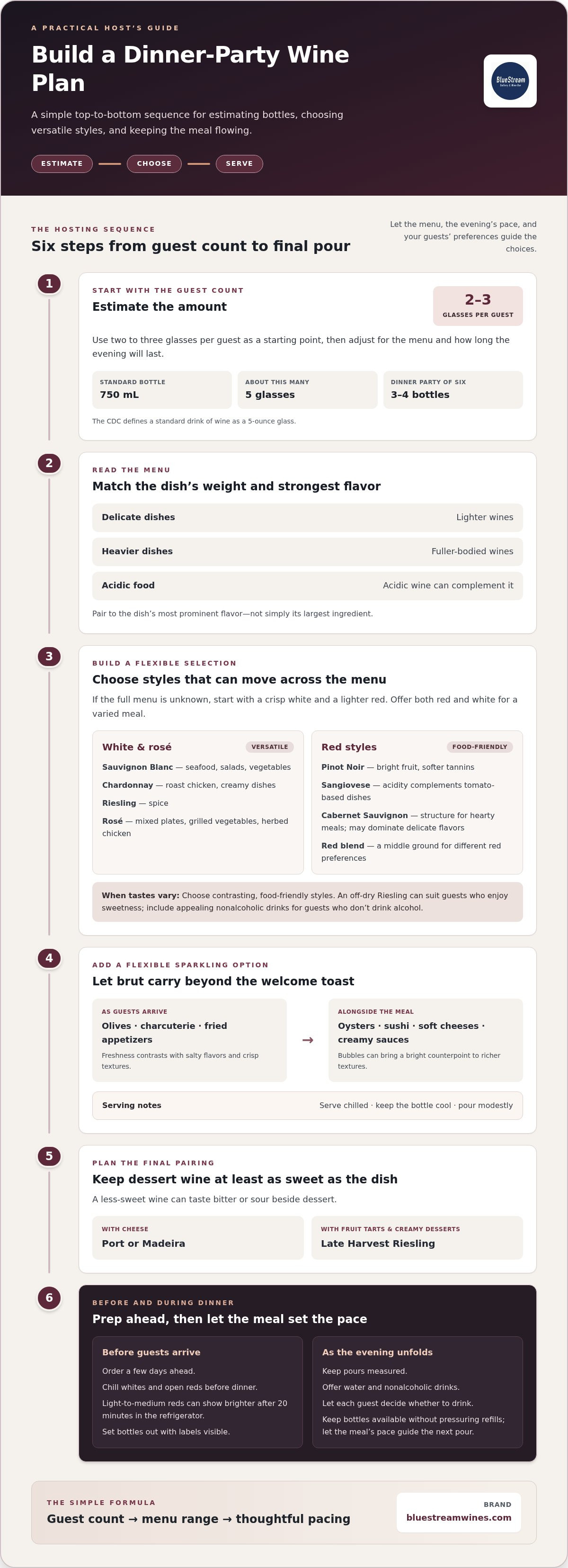
A dinner party of six typically calls for three to four bottles of wine. According to the Alcohol and Tobacco Tax and Trade Bureau, a standard bottle contains 750 mL, which pours about five glasses. A useful starting point is two to three glasses per guest, then adjust your selection to suit the meal and the people around the table.
Choosing wine for a dinner party can feel like one more hosting decision, especially when the menu moves from appetizers to a main course. This guide covers how much to buy, how to choose versatile bottles for different dishes and tastes, and why brut sparkling wine can work beyond the welcome pour. With a thoughtful mix, the evening can feel generous without requiring a different bottle for every course.
Key Takeaways
- Estimate your wine needs around the evening’s pace, menu, and guests’ drinking preferences.
- Choose versatile bottles that can move comfortably from appetizers to the main course.
- Use brut sparkling wine to bring a celebratory touch and pair with more than just the welcome pour.
- Match a wine’s body and freshness to the dish’s weight and strongest flavors for a more harmonious meal.
1. How Much Wine Do You Need for a Dinner Party?
For a practical estimate, plan on two to three glasses per guest, then adjust for the menu and how long the evening will last. A standard wine bottle contains 750 mL, according to the Alcohol and Tobacco Tax and Trade Bureau. That’s approximately five glasses; the Centers for Disease Control and Prevention defines a standard drink of wine as a 5-ounce glass. A dinner party of six typically calls for three to four bottles.
For responsible hosting, keep pours measured, offer water and nonalcoholic drinks, and let each guest decide whether to drink. These are hosting practices, not a statement of legal service rules. For several courses, set aside a lighter, refreshing white wine, such as Sauvignon Blanc, for a starter, then choose a fuller style for richer mains. Match the wine to the dish’s strongest flavor, not simply its largest ingredient. Acidic wine can complement acidic food, while lighter wines suit delicate dishes and fuller-bodied wines suit heavier ones.
Common pairings are a useful starting point: try Sauvignon Blanc with a crisp salad or seafood starter, and a fuller red with a hearty main. For dessert, choose a wine at least as sweet as the dish; a less-sweet pairing can taste bitter or sour. Port or Madeira can accompany cheese, while Late Harvest Riesling suits fruit tarts and creamy desserts.
Plan chilling and opening around the wines you’ve chosen. Ordering a few days ahead gives you time to chill whites and open reds before dinner. Light-to-medium reds often show brighter after twenty minutes in the refrigerator. Keep bottles available without pressuring guests to refill, and let the meal’s pace guide what you pour next.
2. Choosing versatile wines for a dinner party
When deciding how to choose wine for a dinner party, start with the menu’s range rather than searching for one perfect pairing. A red blend, Chardonnay, Riesling, and dry rosé offer distinct styles that can work across shared plates. If you don’t know the full menu yet, choose a crisp white and a lighter red, then add a bottle that reflects your guests’ preferences.
Pinot Noir brings bright fruit and softer tannins, while Sangiovese’s acidity complements tomato-based dishes. Cabernet Sauvignon has more structure for hearty meals, but can dominate delicate flavors. A balanced red blend offers a middle ground when guests enjoy different red styles. Choose a red that suits the food and is enjoyable on its own.
For white wine, Sauvignon Blanc is a lively match for seafood, salads, and vegetable-led dishes. Chardonnay offers a fuller style for roast chicken or creamy preparations, while Riesling can complement spice. Rosé works well with mixed plates, including grilled vegetables and herbed chicken. For a varied menu, offer both red and white so guests can choose what suits each course.
How to choose wine for a dinner party when the menu is unknown? Select contrasting, food-friendly styles instead of unusual bottles that may divide the table. For affordable US options, compare red blends, California Chardonnay, Oregon Pinot Noir, and Washington Riesling; price alone doesn’t determine quality. If you’re weighing how to choose wine for a dinner party for varied tastes, include an off-dry Riesling for guests who enjoy sweetness and appealing nonalcoholic drinks for those who don’t drink alcohol. Set bottles out as guests arrive, with labels visible for easy selection.
3. Brut sparkling wine as a flexible choice
Brut sparkling wine can carry a dinner from the first toast into the meal. Its dry profile and lively bubbles make for a celebratory welcome without locking the evening into one flavor direction. Pour it as guests arrive with olives, charcuterie, or fried appetizers, where its freshness contrasts with salt and crisp textures.
Keep sparkling wine in play beyond the opening pour. Champagne’s lively character can balance salt-forward bites, while sparkling wine also pairs well with oysters, sushi, soft cheeses, and creamy sauces. For a menu with several small plates, serve it alongside the dishes rather than choosing a separate bottle for each one. The bubbles bring a bright counterpoint to richer textures.
Serve sparkling wine chilled, and keep the bottle cool as the meal unfolds. This helps preserve its lively effervescence from the welcome toast through later courses. Set out appropriate glasses before guests arrive, and pour modestly so everyone can enjoy the bubbles while tasting the food.
Brut is especially useful when the menu moves between salty snacks, seafood, and creamy bites. Bring it back alongside a savory course or soft cheese, and notice how the contrast shifts with each pairing. A single sparkling style can give varied dishes a shared thread without making the meal feel overly formal.
If you’re still deciding how to choose wine for a dinner party, try brut with a few contrasting appetizers and let the table discover its favorite match. Explore sparkling wine selections as you plan a celebratory table.
If a guest is unsure what wine to bring, sparkling wine is a versatile choice. A host can offer sparkling wine or a chosen cocktail as guests arrive, alongside charcuterie or other nibbles. California sparkling wine or fruit-forward Prosecco can make a celebratory welcome drink.
Haton Brut Classic Champagne is dry, with white-fruit flavors and effervescence, and is recommended with citrus-forward chicken piccata. Champagne is also recommended as a counterbalance to salt-forward dishes and suggested for celebrations, appetizers, creamy cheeses, and salty snacks.
BlueStream Wines: Wine Bar Lounge
BlueStream Wines offers a Wine Bar Lounge and Wine Tasting Events that bring West Coast wineries or winemakers to the table every third Saturday. It’s a chance to discover different bottles and enjoy the shared experience of tasting together in San Francisco’s Chinatown.
For a private gathering, BlueStream Wines also offers a boutique event space. Whether you’re planning a wine-focused outing or hosting an occasion, choose the setting that suits your plans.
Visit BlueStream Wines in Chinatown or contact the team to plan your next wine gathering.
Make Your Next Gathering Your Own
A memorable dinner party is about more than matching every pour to a plate. Let your guests’ tastes, the mood you want to create, and the pleasure of sharing the table guide your choices. If you’re still deciding how to choose wine for a dinner party, start with the kind of evening you hope to host, then build a selection around that feeling.
BlueStream Wines brings together a neighborhood wine bar, winery-direct bottle shop, and boutique event space in San Francisco’s Chinatown. Explore the wines or plan a gathering in a setting where the ambiance is as refined as the wine.
Contact BlueStream Wines for wine advice, and make your next gathering a celebration worth sharing.
Frequently Asked Questions
How Much Wine Do You Need for a Dinner Party?
Estimate the amount based on your guest count, meal length, and whether wine is the main drink. A practical starting point is two to three glasses per guest, with extra choices for guests who prefer not to drink wine. For a long evening or a wine-focused menu, allow for more; for a brief meal with other drinks, less may suit.
How Much Should You Spend?
Set a total budget that feels comfortable, then choose bottles for their fit with the menu and your guests, not their label price alone. A higher price doesn’t necessarily mean a better wine or pairing. For example, a well-chosen bottle that complements roast chicken may suit the occasion better than a costly red that overwhelms the dish.
How much wine should I buy per guest for a dinner party?
Use half to one bottle per guest as a broad planning range, then refine the estimate for the evening. Choose the lower end for a shorter meal with other drinks; lean higher for a longer gathering where wine is central. If guests are bringing bottles, include those in your estimate so the table has variety without unnecessary surplus.


