
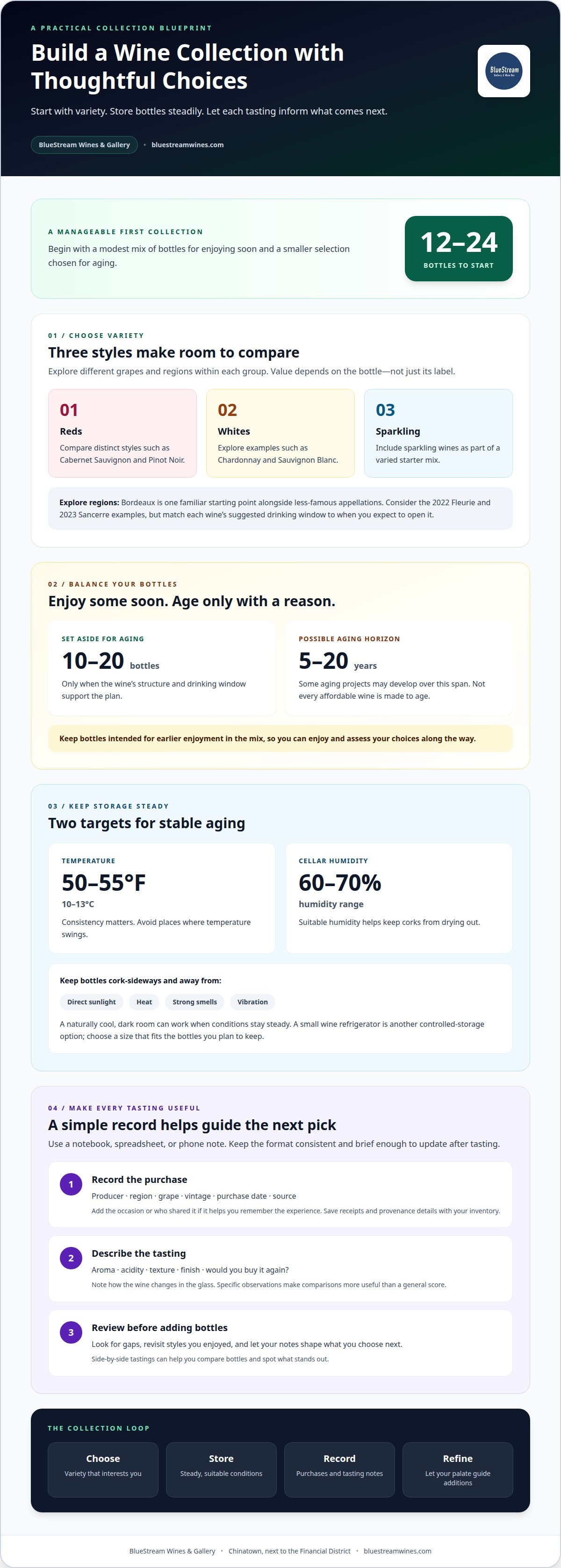
A memorable wine collection is built by thoughtful choices, not expensive bottles. To learn how to build a wine collection on a budget, start with a modest mix of reds, whites, and sparkling wines, and set aside 12 to 24 bottles as a manageable first collection. Include bottles to enjoy soon alongside a few suited to aging.
It’s easy to focus on what goes into the rack and forget what makes a collection useful: knowing what you bought, what you tasted, and which bottles you’d choose again. A simple record turns each opening into a guide for your next pick. This article walks through choosing variety, storing bottles at suitable temperature and humidity, and keeping practical purchase and tasting notes, so your collection can grow with your palate.
Key Takeaways
- Build variety with reds, whites, and sparkling wines, balancing bottles to enjoy soon with a few chosen for aging.
- Keep bottles in a consistently cool, suitably humid place, away from light, heat, strong smells, and vibration.
- Record each purchase and tasting so you can remember what you enjoyed and make more informed choices next time.
- Grow your collection gradually, letting your own tasting notes guide what you add next.
1. Building variety with reds, whites, and sparkling wines
If you’re learning how to build a wine collection on a budget, start with variety rather than a stack of similar bottles. Choose reds, whites, and sparkling wines, then explore different grapes and regions within each group. Cabernet Sauvignon, Pinot Noir, Chardonnay, and Sauvignon Blanc offer distinct styles to compare. Bordeaux is one familiar region to explore alongside less-famous appellations, but value depends on the bottle, not just its label.
A practical answer to how to build a wine collection on a budget is to start with 12 to 24 bottles and add selectively. Include wines for immediate drinking, so you can enjoy and assess your choices, alongside a smaller selection chosen for aging.
Not every affordable wine is made to age. Some can improve over several years with suitable storage, while aging projects may develop over five to twenty years. Set aside 10 to 20 bottles for aging only when the wine’s structure and drinking window support that plan. Otherwise, choose bottles intended for earlier enjoyment.
To compare current vintage examples, consider the 2022 Fleurie and 2023 Sancerre mentioned in the article’s buying examples. A vintage isn’t automatically a bargain or a good fit for cellaring; match its suggested drinking window to when you expect to open it. Record the region, grape, vintage, and style so each tasting helps shape your next purchase.
2. Wine storage temperature and humidity
For stable aging, store wine at 50 to 55 degrees Fahrenheit, or 10 to 13 degrees Celsius. Aim for cellar humidity between 60 and 70 percent to help keep corks from drying out. Consistency matters: avoid spots where temperature swings, such as near an oven or sunny window. A naturally cool, dark room can work when conditions stay steady.
A small wine refrigerator can provide controlled storage without the cost of building a cellar. Choose a unit sized for the bottles you plan to keep, rather than paying for unused capacity. Store corked bottles on their sides, away from direct sunlight, heat, strong smells, and vibration. Many everyday household spaces fail at least one of these tests.
Online wine orders involve state-specific shipping rules and applicable taxes, which depend on the destination. Buying a full or half case can give you more consistency among bottles and may offer better pricing, but discounts vary. Compare the total cost and your storage space before buying more than you can store properly.
Professional wine storage costs depend on space, storage term, and included services, so consider them alongside equipment costs. For a small collection, a self-contained refrigerator may be a simpler starting point. To choose bottles for that collection, explore the online wine store.
3. Keeping wine purchase and tasting records
A wine log helps you remember which bottles deserve another place in your collection. Note the producer, region, grape, vintage, purchase date, and source. Add the occasion or who shared it if those details help you recall the experience. Over time, your notes reveal the regions and styles you reach for most often.
After tasting, jot down specific observations instead of a general score. Describe the aroma, acidity, texture, finish, and whether you’d buy the wine again. Note how it changes in the glass. A consistent format in a notebook, spreadsheet, or phone note makes comparisons easier. Linking tasting notes to purchase details can help you build a wine collection on a budget.
To compare wines before buying more, taste different bottles side by side and record what stands out. A guided tasting can introduce unfamiliar producers and styles; your notes help distinguish a memorable bottle from one that simply suited the moment. Keep entries brief enough to update after each tasting.
Save receipts and provenance details with your inventory. A seller’s name and purchase date can document a bottle’s history and support insurance records. Before your next purchase, review your notes for gaps instead of buying another wine you already know. A record can turn each tasting into a more thoughtful buying choice.
Make your next tasting a lively Saturday outing! BlueStream Wines hosts Wine Tasting Events every 3rd Saturday, featuring West Coast wineries or winemakers. Bring your curiosity, compare styles, and explore wine tasting events for inspiration on your next collection choice.
BlueStream Wines
BlueStream Wines can make growing a collection more social and enjoyable, pairing discovery with a place to explore wines in person. Taste different styles at Wine Tasting Events, then use what you learn to guide thoughtful purchases through the Online and Walk in Wine Store. A Wine Bar Lounge also offers a welcoming setting to enjoy wine and build confidence in your own preferences. These experiences complement your personal notes and careful storage, helping turn each tasting into a more focused next choice.
Whether you’re just beginning or refining a varied collection, contact BlueStream Wines to continue the conversation.
Choose Your Next Bottle with Curiosity
A collection becomes personal through the stories and tastes you choose to keep. As you consider how to build a wine collection on a budget, let curiosity guide your next discovery: explore a style you haven’t tried or revisit a region that caught your attention. Each choice can make your collection feel distinctly yours.
BlueStream Wines brings wine into a welcoming social setting, with a Wine Bar Lounge, Wine Tasting Events, and Private Venue Rentals for gatherings. These are inviting ways to enjoy wine and share discoveries with others.
Ready to talk through your next step? Contact BlueStream Wines for wine advice, and keep building a collection that brings you joy, one thoughtful choice at a time.
Frequently Asked Questions
How can I find good wine deals at retailers, auctions, and wineries?
Compare total bottle costs, not just sticker prices. At auctions, factor in hammer fees, which may add up to 25%, and check provenance before bidding. At retailers, compare grapes, regions, and vintages. Winery tastings let you sample before buying, and choosing one or two bottles at a time keeps purchases manageable.
How should I prioritize everyday drinking wines versus age-worthy bottles?
Choose wines to enjoy soon, then set aside a smaller part of your collection for bottles suited to aging. Not every affordable wine improves with time, so weigh its aging potential against your storage conditions. Ask yourself: would I be happy opening this bottle soon? If not, make sure holding it has a clear purpose.
What wine storage conditions are needed, and how much does affordable storage cost?
For aging, aim for a stable 50 to 55 degrees Fahrenheit and 60 to 70 percent humidity. Keep bottles away from strong light, heat, smells, and vibration. Choose equipment that fits your collection and aging plans.
Can wine be stored safely without a wine refrigerator?
Yes! A consistently cool, dark place away from heat, sunlight, strong smells, and vibration can work. A cool interior closet may beat a kitchen cabinet beside an oven. Store corked bottles on their sides, and avoid spots with frequent temperature changes, such as garages or sunny shelves, especially for bottles intended to age.
How can I track a wine collection and manage drinking windows on a budget?
A free spreadsheet or notebook can track each bottle’s producer, vintage, purchase date, and suggested drinking window. Add a “drink soon” or “hold” status, then sort by it when choosing a bottle. Keep receipts and provenance details with your inventory for purchase records and insurance documentation.


